This Chatham House meeting is chaired by Annette Bohr, Russia and Eurasia Programme. On the panel are: Bradley Jardine and Edward Lemon, both from The Oxus Society for Central Asian Affairs.
Edward and Bradley have just published a book about Beijing’s intentions in Central Asia. It is called ‘The Backlash: China’s Struggle for Influence in Central Asia’
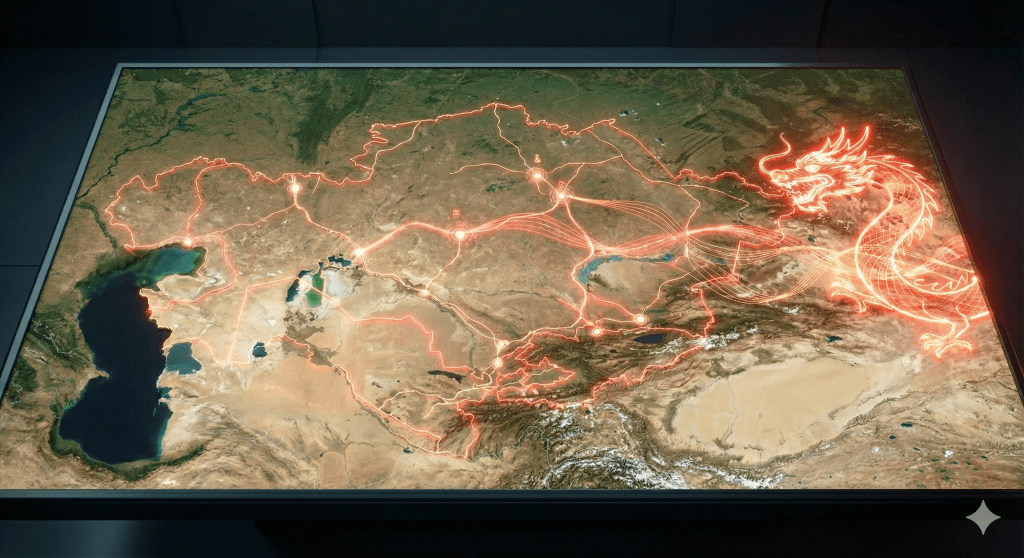
It is a story about China’s influence in the region and often Central Asia is determining how China liaises with the world. The Belt and Road Initiative is central to this. The reaction to China by Central Asian nations affects how China deals with other areas on the globe such as Latin America and Africa. There is a history of deep engagement between China and Central Asia. The Uighur problem is tackled. Often, China’s relations with global elites in these Central Asian areas can draw criticism. The Shanghai Global Governance Initiative is important. The authors spent a lot of time researching on the ground in Central Asia to research the writing of the book. There is wider turmoil through the US withdrawal from Afghanistan.
Is China a key security partner in the region?
There have been protests against China and these demonstrations are most likely to be met with force by Central Asian nations. Human rights attract a lot of attention with the Uighur situation. this has had political repercussions across the border, for example with family members involved. Central Asia is a very vast sparsely populated region. There is fear that China wants to seize more land. There can be labor disputes about working conditions in mines, on a working conditions and environmental front.
There are cultural issues. There is nationalism in the region. There is a perceived issue of Chinese men coming to marry local women. China’s interference in cultural life in the region.The authors tracked 106 China-related protests, many related directly to the Xinjiang region.
China is in quite a fragile position in the region due to the political sensitivities. Their interests attract a lot more protest activity, eg. mines.
Is part of the anti-Chinese sentiment directed towards local elites? Are regional governments trying to bridge that gap? It may affect their own domestic political agendas. A project was canceled in Kyrgyzstan after protests but then quietly reinstated.
There was a peak around 2019-2020 of anti-China protests. Sinophobia can bubble up. China is aware it has an image problem in the region. It is trying to improve its image in the region. There have been moves towards providing the labor market with job skills. There is a move away from extraction and towards higher-end investments that help improve the image. Some people have strong views, either negative or positive, but most people don’t have any strong feelings. With China it is often a blank slate. Often this is replayed in other areas of the world, where China does not have the cultural impact that a nation of its size and power merits. there are also lots of anti-American views in the region. There is also increasing anti-Russian sentiments, in particular among the younger generation. Turkey has developed upon the ties with other areas. Turkey is a popular foreign actor. Gulf States, embracing Islam, attract investment. The Central Asian States do not wish to attract investments with too much religious or cultural influence.
Are there tensions between Russia and China in the region? Is Central Asia a strategic wedge where Russia-China relations break down? Neither actor wants to see instability. Russian international isolation can affect the development in the area. As China moves more into the security sphere in this area, they are tentative with regard to Russia. They may not, for example install the PLA in an area. They are prepared to make these concessions in order jot to antagonize Russia. China is acting now, more autonomously, in the region. China is not really a competitor with Russia but is pushing out other nations eg. NATO, for arms supplies. What power can Russia do anyway? China is the largest creditor in the region. Contrary to conventional wisdom, China’s moves in the region hasn’t detrimentally affected the area’s links with Russia. There is a desire for multi-vectored diplomacy within the region. The countries balance of the superpowers and do not seek dependence. Global geopolitics trends are that countries try to balance relationships. If a superpower tries to force itself it on a smaller country it creates discomfort. The way Central Asia is positioning itself is very balanced. There is a lot of interest in the region and also the Trump USA administration is involved. ca only Washington provide a counterweight o Moscow and Beijing? Turkey, the Gulf States, Japan and Korea plus the European Union play a certain smaller role.
The Central States are not seeking extractive power for their raw materials. There is limited infrastructure that prevents deeper trade involvement with the USA. Authoritarian States in the case of Russia and China, perhaps have more stability than the changing democratic situation in th USA. There are not such strong business links. Russia has a lot of influence, in particular with soft power. Are there any protests against Russia? There have been protests against the invasion of Ukraine in Kazakhstan. 70% of protests in the region, have however, targeted China. The EU cannot really rival Russia and China in the region. Millions of Central Asian migrants go to Russia for work. There are much bigger educational grants and programmes from Russia in the region. Russia is very much the dominant actor in the region.
Has the Taliban’s takeover of Afghanistan affected the area’s relations with China? There is viability for co-operation. There was an attack using drones of Chinese mine workers on the border. There have also been deaths of Chinese citizens in Tajikistan. China could bring in more private security companies. There is a pushback in the region against Chinese surveillance. How does the area see data use and data extraction in the region? Is there a Chinese ‘Big Brother’. There is a lack of transparency of data storage. There is a trade off in deals where there is less control over data. Although China is making huge inroads as a technology actor there is likely to be future debate on ai and data usage and surveillance.
China engages multilaterally but mainly through bilateral meetings. Azerbaijan crops up due to connectivity issues. It is early stages in its role as a Central Asian linkage point. It is a key link in not just Middle Corridor but also North-South trade route for Russia.
The meeting has been a lively and interesting discussion, providing much enlightenment on developments in the Central Asian region of the World.


Leave a comment