

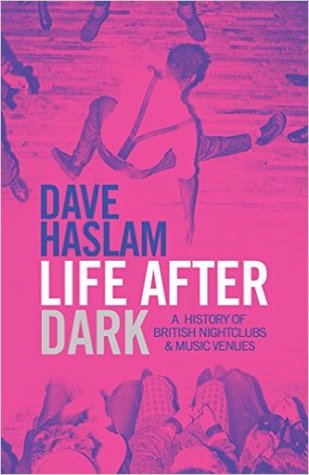
I got excited when this book arrived on my doorstep. At first glance it has all the key ingredients for a great book. Hacienda DJ author, history of British nightclubs – I expected lots of gory detail and exciting anecdotes and couldn’t wait to get to the acid house chapters….
The history begins back in Victorian dancefloors. From the outset a consistent theme throughout our nightclub adventure is controversy, rebellion and culture. Working class escapism as highlighted by co-founder of communism, Fredrich Engels as he discussed working class conditions in Manchester, illustrating the inebriated masses keen to escape the drudgery of factory work. Moving through, each chapter tends to focus on a specific era. We go through Jazz, rock and roll, Mods and rockers, Punk and disco and through to the modern age electronica plus Britpop and present day trends. The book often focuses on particular niche venues across various cities in the UK, both small and large, venues which influenced the whole culture. It’s so surprising considering the incredible popularity of such bands as the Beatles, the Rolling Stones and The Animals, to discover how they really became grounded and formed the elements of their success in small club residencies: The Cavern in Liverpool for the Beatles, The Crawdaddy in London for the Rolling Stones and the Club a Go Go in Newcastle for The Animals. Later so many dance DJs carved their names in residencies such as at the Hacienda in Manchester and also self-promoted London nights such as Spectrum, Shoom and Trip at the Astoria. As a DJ I found it particularly interesting seeing the evolution of my art. How early than I had imagined venues were turning away from live acts and creating spaces for vinyl spinners or jukeboxes where the latest music from all over the world could entertain the crowd in its original studio glory rather than lame band covers playing the same old stuff. Often the first and most successful DJs to contribute to dancefloor culture were the ones with the most eclectic well-resourced vinyl collections. The resistance from formal old school music industry to record-spinners was there from the outset. On a local tip for me, John Sicolo, famed owner of TJS in Newport, one of John Peel’s most favourite live venues, gets a mention in the introduction and although Miss Moneypennys @ Bonds and elsewhere and Chuff Chuff in Birmingham escapes much attention, I did, in particular love the focus on Bristol with detailed analysis of the formation of Wild Bunch, leading to the musical movement that is Massive Attack. I think the Korean restaurant whose basement was the spiritual home of Daddy G’s crew was once a Thai restaurant on Park Row where I’d treat all my Shuffle resident DJs to meals before our weekend gigs. Throughout the book special attention is paid to the gay scene and how it has influenced UK culture. From clandestine beginnings we see a more accepted mainstream less-discriminatory inclusion in the modern day entertainment environment. There are some darker tales and the history of Gary Glitter at the Cavern and Jimmy Saville’s live DJing are historic details I’d rather not know tbh but truth is out there…. The whole acid house coverage is where DJ author, Dave Haslam comes into his own. The whole book is written with intellectual flair and creative passion but from the evolution of Hacienda to coverage of Sasha at Shelleys and rise of Ministry of Sound Garage, Summer of Love Ibiza London acid house founders, the story bubbles and Haslam lets loose with a soul of a professional dance music aficionado. As someone who grew up in nightclubs and has spent a lifetime dodging around venues in the UK as a DJ, promoter etc it was great reading about many people who influenced my life so much and also people I’ver been privileged enough to work alongside. Paul Oakenfold, Danny Rampling, Nicky Holloway, Norman Jay, Judge Jules to name a few. Most of the London and Birmingham clubs that I did play in have since closed their doors and one consistent fact I notice in the book is that venues often have a short shelf life. Often many are a lot smaller and these are the most influential in the various eras. There are a few survivors but so many are now tescos or blocks of flats or shopping centres. It’s noticeable how marginal the lines are when it comes to finance and how fashion dictates and authorities discord with entertainment sector has harsh political consequences. The book is quite substantial and detailed with so many new facts for me and amazing anecdotes I shall be relaying to all who might listen to me. However, I need more. at 400 pages it’s not enough. There’s too many characters left in silence too many more venues I need the facts on. I want to keep Mister Haslam’s pen busy and will be applying to Routledge for him to be approached to compile a definitive Encyclopedia of British nightlife and I’m sure Haslam could maybe expand his horizons beyond the confines of this tiny island and deliver a history of global nightlife. I want to know how many guitars Jimi Hendrix has put through the ceiling in Antarctica and for every nook and cranny from darkest Africa, Chinese villages, Amazonian jungle hideouts, Saharan oases to Detroit back alleys, New York boutiques and Chicago storage facilities I need to know what bands are on, what the DJs are spinning, dress code, bouncer quality and profit and loss situation. Plenty more to crack on with, Dave. Get busy. Like any vinyl collection there’s always room for more… Anyone from the humblest cloak room assistant to the most pretentious superstar DJ should get onto this book and analyse and enjoy the great achievement of its original creation.
Discover more from Wez G Official Website
Subscribe to get the latest posts sent to your email.