This Chatham House roundtable discussion is chaired by Hugo Dixon, Reuters. On the panel are: Galip Dalay, Turkey Initiative, MENA Programme and Natalie Sabanadze, Russia and Eurasia Programme.
Galip and Natalie have done a report on ‘Russia’s Black Sea Strategy’.
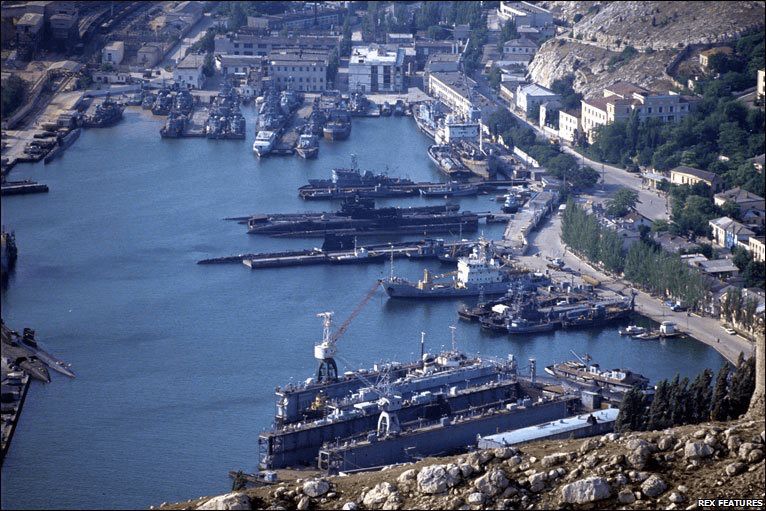
The entire European security architecture is under scrutiny in the high level peace talks that are currently taking place. By understanding the Black Sea we can see what Russia aims to take from the talks. The confrontation with the West has taken place through the Black Sea. They have invaded their neighbours in the Black Sea. eg. Crimea 2014. It is not just about territory for Russia but about identity as it tries to enforce its global power agenda. In the peace talks Ukraine is fighting for its independence and Russia is fighting for its role as a global power. Russia is redefining its power beyond its boundaries. There are Russian-speakers. The Black Sea delivers cultural and political reach. The Black Sea is seen as a Russian sphere of influence. Russia is reaching out to Africa, to the Middle East and to Latin America. Putin makes speeches steeped in the historical narrative. It wants to continue to make claims It intends to win the war in stages. For example, it may claim Odessa later. What it cannot get through war it will try to get through soft means.
The Black Sea is central to Russia’s global future. It is the inter-connection of multiple regions at the same time. It has an idea of some sort of condominium in the Black Sea with Russia managing the North and Turkey managing the South. Other nations – the littoral states – have no role.Turkey disagrees with Russia’s attempts at regional hegemony. Other nations seek solace with closer ties to NATO and the EU. This happens the more Russia attempts to dominate the region. There are no better guarantees against Russia aggression by doing this. The Black Sea is essential to Russia’s remaking of its near neighbourhood. The Ukraine outcome will reshape the politics in other countries. If Russia is seen as victorious it will have a significant impact on other countries in the Caucasas and Central Asia. It could be chilling for other countries. Russia’s influence in the Mediterranean is affected by what happens in the Black Sea. There is an attempt to influence the whole area as a great Russian global power.
If Ukraine is turned into a vassal state it will have severe geopolitical ramifications elsewhere. Why should the Black Sea be of concern to other countries apart from the Ukraine issue? Romania has been trying to attract investment to the Black Sea. The grain trade in the Black Sea can affect influence in the Global South as it guarantees food security The Black Sea is important for European energy security. The Black Sea can turn into the soft underbelly of being able to undermine Western influence on countries there. If Russia gets the whole of the Ukrainian Black Sea coast it can get directly to Moldova and then on to the Balkans. What global order can Russia impose with greater force if it completely controls the Black Sea?
There is a difference between dominance of the Black Sea and sharing power with Turkey and to a lesser extent Romania. Turkey controls the straits. Russia cannot control beyond the Black Sea as long as Turkey does have control of the Dardanelles. We shouldn’t be so worried by condominium but by dominance. Will Turkey allow itself to be bullied by Russia? Turkey is clearly pro-Ukraine. Turkey was one of the first states to provide Ukraine with military items. Russia has always been in the Black Sea. The relationship between Russia and Turkey is competitive. They tend never to be on the same side. By Turkey allowing a NATO presence, a rereading of it, it may want to stick to what it currently has in case Russia interprets it differently. Behind the facade of friendship between Russia and Turkey there is competition. Turkey seems to be falling behind. It is an increasingly competitive dynamic. Turkey, Romania and Bulgaria are working together conducting mine-cleaning.
Russia learns and adapts and it won’t be long before it uses what it has learned from Ukraine situation and applies it to a new field. Ukrainian survival is dependent on using the Black Sea corridor for its grain exports etc.Russia is learning how to use sea drones after Ukraine initially defeated them using these drones. Russia have adopted a new naval strategy for 2025. It has been developing drones and smaller vessels. They are working towards the future. Russia cannot move from the Eastern Mediterranean to the Black Sea as the straits are closed and Russia will put pressure on Turkey to change this. A ceasefire is not the cessation of hostilities. If the straits open then Russia can rebuild and consolidate power. If pressure after a peace deal from Russia and The USA could force Turkey to reopen the straits. Otherwise they are likely to leave the opening of the straits until quite late.
Can we expect to see an escalation in the Black Sea? When we go into negotiations with Russia, what are we demanding from Russia? What about Crimea? How do we ensure security. What about the Shadow Fleet? What can be expected from both Ukraine and Russia. Russia are likely to have made territorial gains. Ukraine will remain a Black Sea power. It is unlikely that Ukraine will join NATO. Restraints on Ukraine’s military strength will reduce its sovereignty. Almost every plan put forward for Europe relies on the USA. Safe navigation should be protected. Russia will try to build in conditions so it can retake Odessa. Soft power and Russification. Stage 1 could be agreed but at a later date this could change. They use this soft mechanism as part of their political strategy. Could Crimea be demilitarized?
There was a rising Russian closeness in Turkey prior to the war. Will there be a rereading of Russia in Turkey after the war? The implications of Russian hegemony in the Black Sea: The Middle corridor – leaves a problem fro the Central Asian republics. Do they continue to trust Russia for their links to Europe or do they use a Middle Corridor? The Middle corridor is from the bottom end of Armenia into Turkey. The classic middle corridor runs through Georgia into the Black Sea. Will Turkey co-ordinate more with Russia or deal and focus with others? Since the 1990s Russia has been reduced. A different form of relationship was possible between Russia and Turkey. But a revisionist Russia means that Turkey has to rebalance. WIll Turkey move closer to the West, even with the USA moving away from NATO? Will we see more counter-balances? Turkey is quieter in stating its political aims.
The Middle Corridor came into focus during this conflict. Trade has significantly increased there. Georgia has done a deal with China, this makes the deep sea port safer from Russian attacks. The USA is also looking for European support in peace-building. Georgia has chosen to be on the sidelines of many of the politics. Georgia is now, perhaps the biggest asset for Russia in the South Caucasus.
Should NATO establish a standing naval force in the Black Sea consisting entirely of drones? What do conventions prohibit? Will Turkey commit to this?
How will NATO respond if Putin gets to Odessa and tries to take it? What should be asked of Europeans? Should they be committed to protecting Odessa? Maybe a European ground force to compliment maritime security? Will it be allowed in the peace agreements to have a foreign force based there?
Is Georgia a reliable partner for oil and gas? What about Azerbaijan as it has been attacked by Russia? How serious is the energy situation and is it deteriorating? Is there an international plan in place to support Moldova and the de-facto states such as Transnistria? There are opportunities to turn Russian assets into Russian vulnerabilities. Georgia is not a reliable political partner but the current regime is interested in connectivity projects to bolster its economy. In Azerbaijan there are changing relations with European powers. A post-Soviet army has been trained with NATO concepts. This creates a competitive dynamic with Russia. The Middle Corridor should be neither over-estimated or under-estimated. It also involves China and Europe. Armenia could be brought on board with the normalizing of relations with Azerbaijan.
What are the main parallels that can be drawn between Russia and the Black Sea and Russia and The Baltics? How can Russia’s improving relations with India affect Russia’s vision of a new world order?
The ore it gets pushed in the Baltics, the more it doubles down in the Black Sea. Russia is more constrained in the Baltics. It will reconsolidate its power in the Black Sea. India have more interest in Central Asia and the Caucasus. India’s relations with China are important. Reshaping of the global power is more amenable to India as they see it as an opportunity. Destruction of US dominance is risky for India though due to potential Chinese dominance.
How will Turkey’s relations to the Black Sea affect any contributions to a NATO peacekeeping force? Turkey at a military level is already part of the ‘coalition of the willing.’ How committed will Europeans and the Americans be? In theory Turkey is open to the ideas although options will be carefully considered. Many of the countries don’t see eye to eye. Russia will not look positively on any European force.
Wars could break out between other powers in the region, for example Iran.
The Black Sea is an important global region and today’s meeting has been enlightening and is most certainly food for thought for the future. Will Russia achieve dominance in the Black Sea region?


Leave a comment