
Cities Produce Inequality

Drawing on material from the Connecting Lives strand, explain how qualitative and quantitative types of evidence can be used to support the claim that cities produce inequality. Inequality in cities exists for a variety of interconnected reasons—economic, historical, political, and social. ‘The wealthiest 10% of households had household wealth of £1,200,500…

View More Cities Produce Inequality

Nineteenth Century Revolutions and the French Working Classes

The revolutions of 1830, 1848, and 1870 significantly impacted French working classes, spurring their organization and political consciousness. Despite initial betrayals and repression by the bourgeoisie, these uprisings fostered advances in labor rights, living standards, and democratic participation, ultimately leading to a more cohesive and recognized working class by the end of the century.

View More Nineteenth Century Revolutions and the French Working Classes

Review: A Social History of France in the 19th Century – by Christophe Charle

The translated academic study offers a detailed examination of 19th century French society, highlighting the impact of various revolutions that generally favored the bourgeois elite despite initial lower-class motivations. It discusses industrialization, improved living standards, and regional variations, while recognizing the rich data sometimes overwhelms the narrative. Overall, it remains a valuable read.

View More Review: A Social History of France in the 19th Century – by Christophe Charle

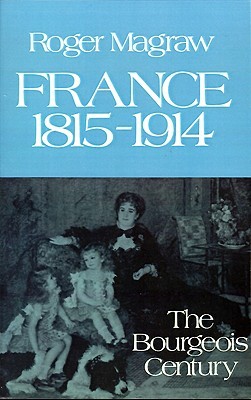
Review: France 1815-1914 The Bourgeois Century – by Roger Magraw

This book examines post-revolutionary France, highlighting the bourgeois’s dominance during various changes of power from 1789 onwards. It explores modernisation, capitalism’s conflict with the left, and rising living standards among the working class. The author skillfully elaborates on complex topics, emphasizing the lower classes’ experiences amid political transformations.

View More Review: France 1815-1914 The Bourgeois Century – by Roger Magraw