
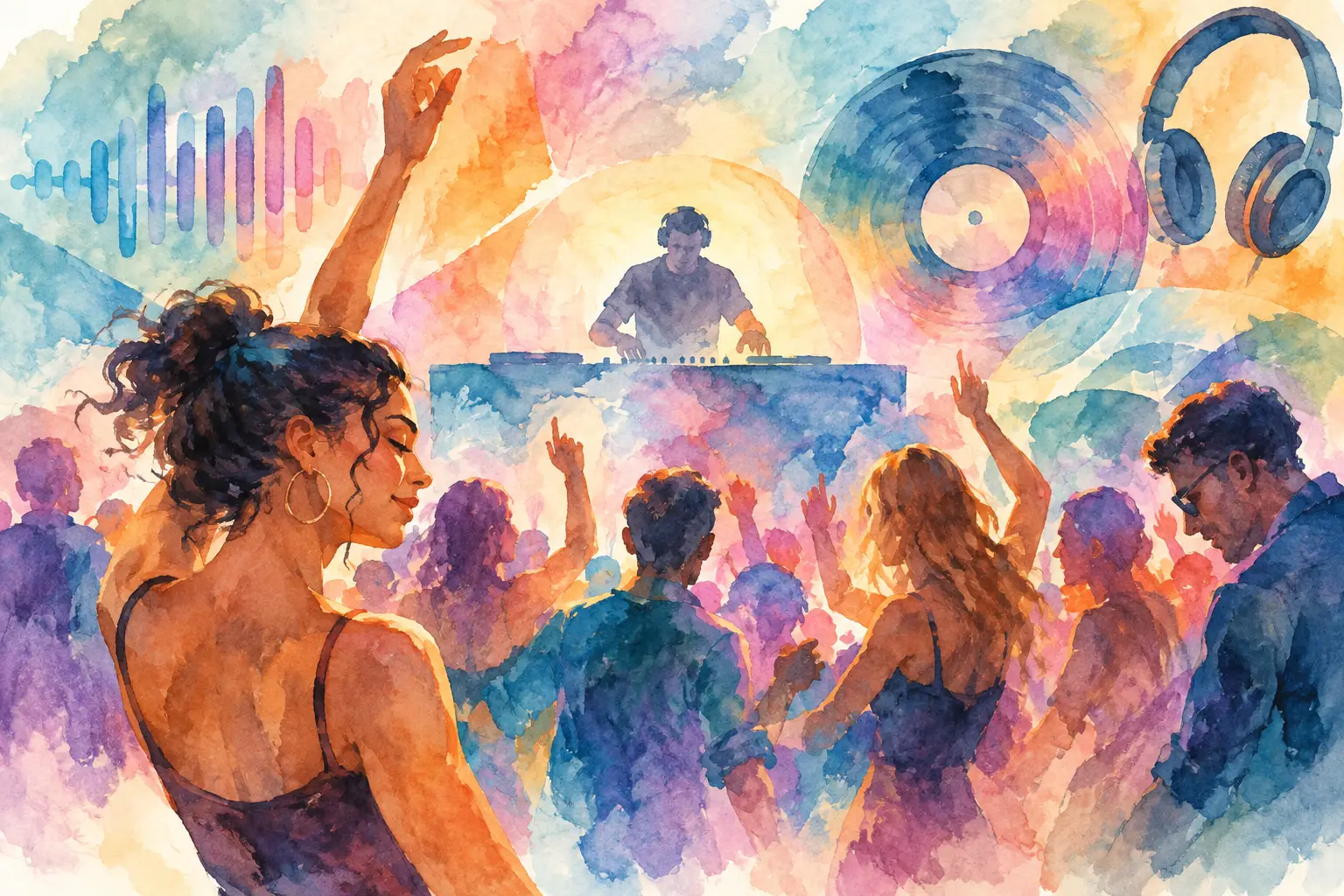
A dancefloor can tell you more than a feed ever will. One minute a room is locked into a chunky house groove; the next, a sharp techno kick, a rave vocal or a leftfield bass switch changes the temperature completely. Dance trends matter because they show where listeners, DJs and producers are finding release right now – not just what is being pushed hardest online.
For anyone building playlists, planning a set or looking for the next track to soundtrack a late-night drive, the most useful question is not, “What is viral?” It is, “What will people still want to hear when the novelty has gone?” The strongest dance music has always had a physical test: does it move the room, the car, the kitchen, the beach or the headphones?
Why dance trends are moving faster
Dance culture has always travelled quickly between cities, scenes and record bags. Now clips, DJ track IDs, short-form videos and streaming playlists accelerate that trip. A hook can reach millions before a producer has played the tune at their local night. That speed creates opportunity for independent artists, but it also makes imitation easy. By the time a sound has been labelled a trend, there may already be hundreds of near-identical versions competing for attention.
The answer is not to ignore what is happening. It is to understand the ingredient people are reacting to. Is it the tempo? A playful vocal? A familiar sample flipped into a tougher setting? A stripped-back drop that gives a DJ room to mix? The producer who recognises the emotional engine of a trend has more longevity than the one copying its surface details.
There is also less pressure for listeners to stay loyal to one lane. A playlist might move from melodic house into UK garage, then into techno, drum and bass or a sunlit chillout cut without anyone blinking. That is great news for curious listeners and artists with range. It does mean genre labels are best used as signposts, not fences.
The return of energy without the rulebook
One clear shift is the appetite for tracks that get to the point. Longer builds still work in the right club, especially in techno and progressive settings, but plenty of current dance records introduce their main riff, vocal phrase or bass identity early. Streaming has encouraged that urgency, while DJs still need records with enough space to blend. The best productions manage both: an immediate reason to stay, plus a groove sturdy enough to work beyond the first 20 seconds.
Faster tempos are part of the picture too. Hard dance, trance touches, energetic techno and drum and bass have all fed a renewed hunger for momentum. Yet faster does not automatically mean heavier. A bright piano, a cheeky vocal or a simple hands-in-the-air melody can land just as hard as industrial pressure when the kick and arrangement are right.
Acid continues to be one of dance music’s most reliable sparks. That sliding, squelching line can sound raw, playful, futuristic or properly dark depending on the treatment. It works because it cuts through polite production. A well-placed acid pattern gives a track character in seconds, whether it sits in a warehouse-minded techno tool or a loose, party-ready house record.
Dance trends worth hearing beyond the hype
The most interesting movement is not one genre taking over. It is the way familiar club languages are being combined with more confidence. House drums can carry rave stabs. Techno can make room for a soulful vocal. A pop-minded topline can sit over a rougher bassline without sanding away the track’s edge. These crossovers are not new, but audiences are more open to them when the transition feels intentional.
Nostalgia remains powerful, particularly when producers avoid treating old sounds like museum pieces. A 1990s piano tone, a disco vocal fragment or a classic rave texture can create instant connection. The trade-off is obvious: recognition gets a first reaction, but a track needs its own point of view to earn repeat plays. The records that last usually twist the reference into something personal rather than simply recreating it.
Vocal dance music is also enjoying a broad moment. Not every club record needs a full verse-chorus structure, but a memorable phrase gives listeners something to carry away from the set. It can be a sung line, a spoken command, a funny aside or a chopped-up fragment. For DJs, vocals are useful tension tools. For fans, they are the detail that turns “that tune” into something they can find, share and add to a playlist.
At the other end, instrumental tracks remain vital. They give DJs room to shape a journey rather than playing a sequence of singalongs. A rolling house cut, a hypnotic techno groove or a breakbeat workout can be more flexible than a vocal-led anthem. Different moments require different tools. A packed peak-time room may want a hook; an opening set may need atmosphere, patience and percussion.
The groove is still the main event
Trends can make people press play, but groove makes them stay. That sounds basic because it is basic. Dance music is functional art. The kick, bass, percussion and swing need to agree with each other before any fashionable sound can do its job.
This is where regional influence remains exciting. UK garage swing, Chicago house jack, Detroit techno discipline, Balearic looseness, Latin percussion and global club rhythms are all part of a wider conversation. They should be approached with respect rather than used as decorative shortcuts. Learn what makes a rhythm work, where it comes from and how dancers respond to it. The result will have more life than a preset-led imitation.
What DJs should take from current dance trends
A good DJ set should not sound like an algorithm on shuffle. It should have a point of view. That can mean moving from warm-up house into acid pressure, placing a vocal record after three deeper tools, or dropping a left-turn track that resets the room. Trend-aware does not mean trend-controlled.
Build crates around feelings as well as genres. Keep a section for rolling momentum, another for vocal lift, another for unruly peak-time moments and one for curveballs. This makes it easier to react when the room tells you it wants something different. It also stops every set from following the same predictable climb.
Pay attention to track length and arrangement. Some streaming-led releases are exciting but have little introduction or outro for mixing. They can still be brilliant weapons, especially for quick transitions, doubles and edits. Balance them with records that breathe. A long drum-led intro can be exactly what is needed after a barrage of instant hooks.
For producers, the practical lesson is equally clear: make music you would genuinely play. If a new sound sparks an idea, chase it. If you are forcing it because everyone else appears to be doing it, listeners will often hear the hesitation. Originality does not require inventing a new genre every Friday. It can be as simple as a distinctive bass sound, an unexpected lyric, a cleaner arrangement or the confidence to leave space.
The club, the playlist and the people
Playlists have become discovery engines, and that matters. They introduce tracks to listeners who may never see a flyer, hear a pirate radio show or queue outside a venue at 1am. But playlists cannot replace the feedback loop of a live crowd. A track that streams well may not hit in a club, while a strange little DJ weapon can become unforgettable in the right room.
That gap is healthy. It keeps dance music from becoming one-size-fits-all. Make a playlist for running, a set for a basement, a record for the beach, a remix for the drive home. The wider the listening context, the more chances there are for fresh sounds to find their people.
At Wez G Music, that freedom between house, acid, techno, chillout, drum and bass and vocal-led material is part of the fun. The point is not to chase every new label. It is to keep the catalogue moving, give listeners different routes into the sound, and make room for a track to surprise you.
The next big thing may arrive with a giant hook, a 303 line, a breakbeat, a whisper or one perfectly timed kick drum. Keep your ears open, trust the groove, and back the records that still feel good after the feed has moved on. CHEERS!

Leave a Reply