
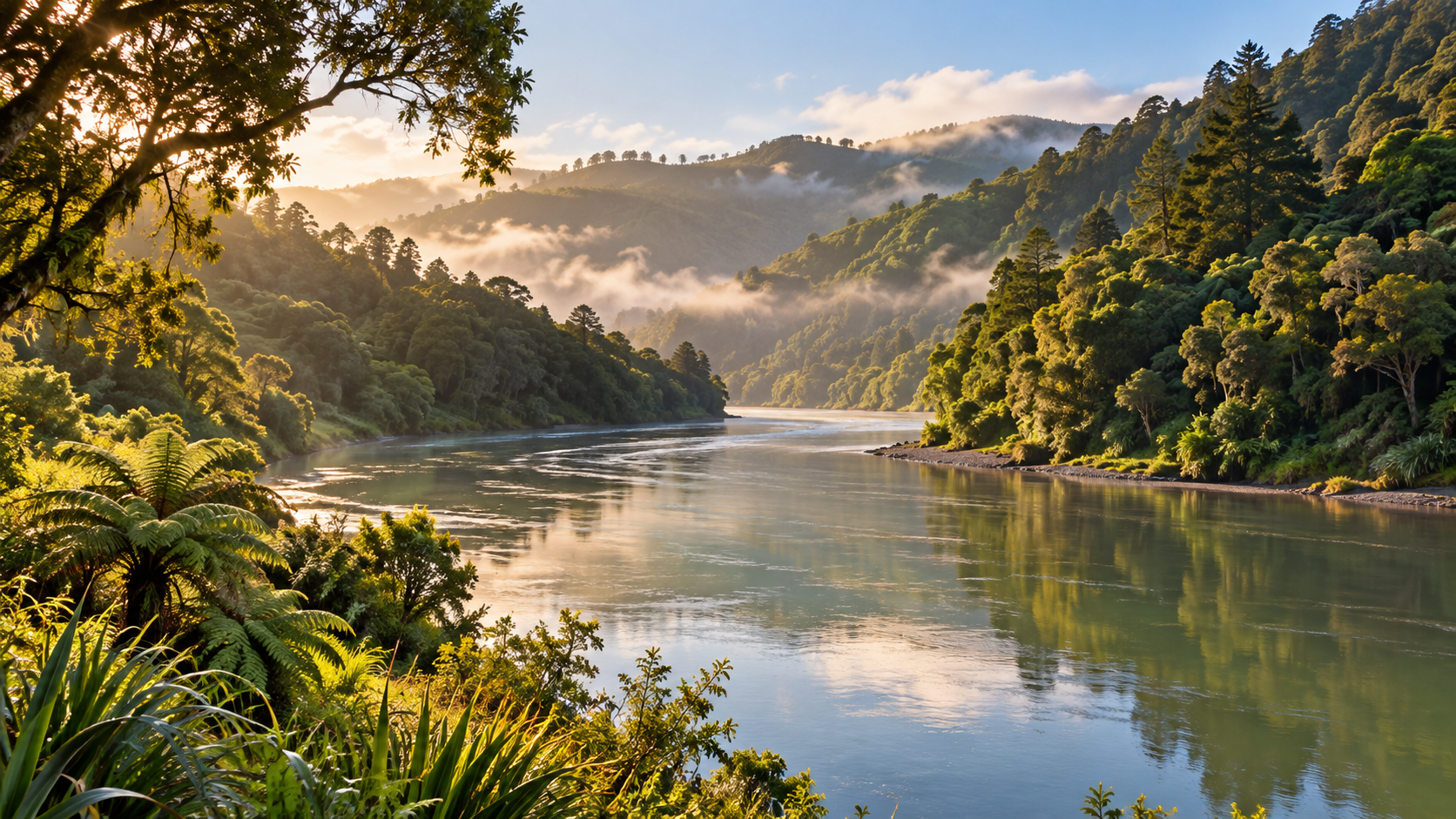
Can a river be a person?
It sounds like the opening of a philosophical debate. In New Zealand, it became a question with a practical legal answer. In March 2017, the Whanganui River became the world’s first river to be recognised as a legal person, marking a remarkable change in how the law understands our relationship with nature. United Nations Harmony with Nature research
For me, this story has a personal connection. My mother hails from Wanganui, and I have a large family based there. I lived there from 2005 to 2006 and spent a lot of time on the beautiful river. It is a lovely place to spend time and to live, and the river is a huge part of what makes it special.
You may have seen the name written as Wanganui, as I have used it when talking about my family connections. Here, I’m using Whanganui for the river, following the spelling in the legislation.
Having lived there, I find its legal recognition particularly moving. This is a place tied to my family and my own memories. The story also reaches far beyond my experience, into Māori identity, generations of struggle and the relationship between people and the natural world.
A river with a place in my life
During my time in Wanganui, the river was somewhere I spent many hours and came to appreciate deeply. Its beauty, and the pleasure of being on it, remain part of my memories of living in New Zealand.
There is something special about having both family roots and your own experience of a place. Wanganui means both to me. My mother’s connection, my large family there and the time I spent living there give it a lasting place in my life.
That personal attachment also makes me interested in what it means to protect a river. When somewhere has given you so much enjoyment, its future matters. You want other people to have the chance to experience its beauty too.
What does legal personhood actually mean?
Legal personhood gives an entity a recognised identity within the law. Companies have it, for example: they can hold rights and responsibilities even though they are not human beings.
The Te Awa Tupua (Whanganui River Claims Settlement) Act 2017, which received Royal Assent on 20 March 2017, recognises Te Awa Tupua as a legal person with rights, powers, duties and liabilities. Its legal identity encompasses the river as a whole, including its physical and metaphysical elements. Te Awa Tupua Act
In practice, the river’s interests are represented through Te Pou Tupua, an office held by two people, nominated respectively by iwi with interests in the river and by the Crown. They act on behalf of Te Awa Tupua and promote its health and well-being. Te Awa Tupua Act
This gives the river a legal voice through people entrusted with speaking for it.
“I am the River and the River is me”
To understand why this happened, we need to look beyond the novelty of the legal mechanism.
For Whanganui iwi and hapū, the river connects communities, sacred places, ancestry and everyday life. It has served as an artery linking people from the mountains to the sea. Its significance reaches far beyond the water flowing between its banks. Te Pou Tupua
One of the principles recognised in the legislation expresses that relationship:
“Ko au te Awa, ko te Awa ko au” — “I am the River and the River is me.”
The Act recognises the enduring connection and responsibility of the river’s iwi and hapū to Te Awa Tupua. Te Awa Tupua Act
My own affection for the river comes from family and the time I spent there. The ancestral relationship recognised by the settlement has its own much deeper history. Understanding that history is essential to understanding why this law matters.
Parliament was finding a way for the legal system to recognise a relationship that Whanganui communities had upheld for generations.
Generations of struggle
The 2017 settlement followed a long history of petitions and legal proceedings.
Whanganui iwi began petitioning Parliament in the 1870s. Crown works to develop steamer navigation and extract riverbed minerals subsequently damaged fisheries and eel weirs, while degrading the river’s ecological, cultural and spiritual value. The campaign for recognition continued through courts and the Waitangi Tribunal. Whanganui District Council
The settlement included financial redress and a NZ$30 million fund to advance the river’s health and restoration. Legal recognition formed part of a wider effort to address historical harm and support the river’s future. Whanganui District Council
Behind the international headlines were generations of people whose persistence made this recognition possible.
Why this matters beyond New Zealand
What interests me most is the change in perspective.
Environmental arguments often begin with what a river provides: drinking water, electricity, transport, recreation or economic value. Those benefits matter. But treating the river as a legal person invites another question: what does the river itself need to remain healthy?
That question could sharpen how we think about waterways here in Britain. What would change if decisions about a river began with the health of the entire system, alongside the demands of those who use it?
Legal recognition alone cannot guarantee clean water. Restoration requires resources, effective decisions and sustained work. New Zealand’s Department of Conservation describes ongoing collaborative restoration in the Whanganui catchment, within the Te Awa Tupua framework. Department of Conservation
The significance of Whanganui is that it gives those efforts a different foundation. The river has an identity of its own, and people have a responsibility to speak for its well-being.
For me, it will always be the beautiful river I spent so much time on during 2005 and 2006, in a place where my mother comes from and so much of my family lives. Wanganui is a wonderful place to be, and a wonderful place to call home.
Knowing that its river has a recognised voice in law makes that connection feel all the more meaningful. I hope future generations — including those in my own family — will be able to enjoy it, care for it and build their own memories along its waters.


Leave a Reply