
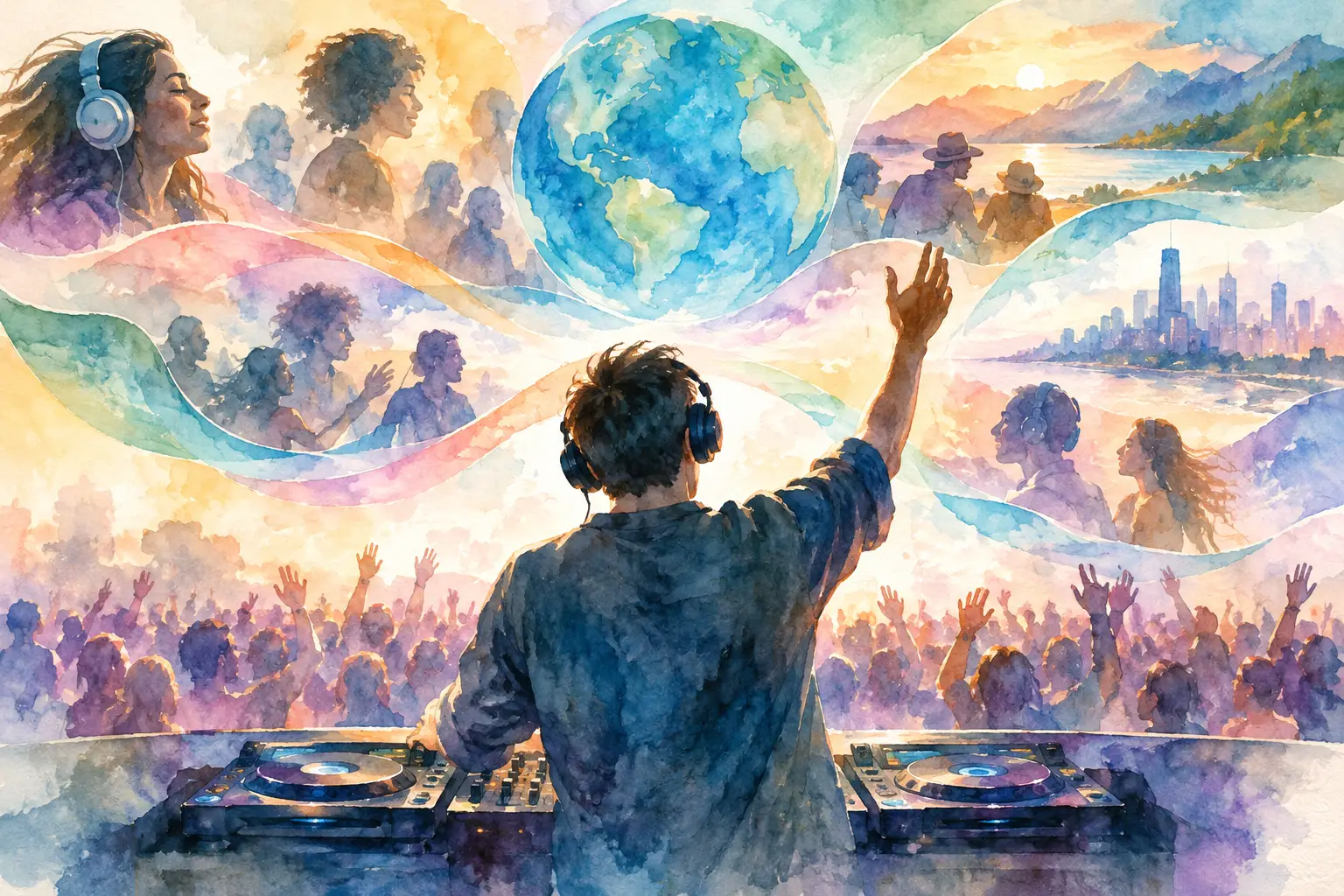
A packed room still tells the truth. You can own the newest controller, have an immaculate social feed and play a technically perfect set, but none of it matters if the floor does not move. The future of DJing will be shaped by technology, streaming and clever new tools, yet the central job remains brilliantly old-school: read the room, select with purpose and make people feel part of the same moment.
That is good news for DJs who care about music rather than hype alone. The gear will keep changing. The platforms will keep changing. But strong taste, timing and an identity that listeners recognise are becoming more valuable, not less.
The future of DJing is not a battle against technology
AI, real-time stem separation, cloud libraries and automated mixing have already changed what a DJ can do. A track can be stripped into vocals, drums, bass and musical parts in seconds. A DJ can rebuild a familiar record during a set, making space for an a cappella, a heavier kick or a surprise transition. This is not science fiction for a distant club scene. It is part of modern DJ practice.
The lazy argument is that these tools make DJs unnecessary. In reality, they raise a more useful question: what should a DJ do with the extra freedom? Anyone can isolate a vocal. Knowing when to use it, and when to leave a great record alone, is where judgement enters the picture.
Automation will make basic mixing easier, particularly for bedroom DJs and party selectors. That is not a disaster. It lowers the barrier to getting started, which means more people can fall in love with dance music and develop their own sound. The trade-off is that technical competence alone will no longer stand out. Clean beatmatching is expected. Musical storytelling is the differentiator.
A great set has tension, release, contrast and character. It can travel from acid pressure to warm house, slip through techno, bring in a drum and bass burst, then land on a vocal moment that changes the temperature of the room. No sync button can decide that for you.
Selection will matter more than access
For years, DJs built reputations through records people could not easily find. Now almost every listener carries a music library in their pocket. The scarcity is no longer access. It is curation.
That gives the modern DJ a bigger role as a trusted filter. A good selector does not simply play what is popular. They connect records that belong together emotionally, rhythmically or culturally, even when the genres look different on paper. They know which familiar tune will bring people together and which left-field follow-up will keep the set from sounding predictable.
Streaming has expanded discovery, but it has also created a tidal wave of choice. Listeners need people with taste to cut through it. A focused mix, a well-maintained playlist, a radio show with personality or a short video sharing a new find can all do the work that record shops and late-night recommendations once did.
For independent artists, this matters enormously. A DJ who supports new music with genuine belief can turn a release into a memory for a crowd. That support is stronger than dropping a track into an algorithmic pile. It gives the track context, energy and a human advocate.
DJs are becoming broadcasters as well as performers
The booth is no longer the only stage. A DJ can build an audience through recorded mixes, livestreams, short clips, radio programming, playlists and original releases. Each format reaches people differently.
A club set is immediate and physical. A mix can travel across borders and still sound fresh months later. A playlist can introduce listeners to a sound one track at a time. A quick studio clip can show the humour, graft and personality behind the music. None replaces the others. Together, they give a DJ more ways to stay present between gigs.
This is where having a recognisable world around the music helps. Wez G Music has always worked across releases, mixes, radio, playful characters and multiple dance-music moods because audiences do not only follow formats. They follow a feeling and a point of view.
The risk is becoming a full-time content machine with no time left to dig for records or practise. Posting every day is not a substitute for building a sound. DJs do not need to copy every trend or turn every set into a backdrop for a phone camera. Better to share fewer things that actually say something: a new remix, a standout transition, a fresh playlist placement, a mix with a clear theme, or a record that deserves ears.
Live crowds will want something they cannot stream
As more music becomes available everywhere, live events gain value precisely because they cannot be replayed in the same way. A crowd responding to the first bar of a record, a sudden left turn that works, a hands-in-the-air chorus after a long build – these moments are social, temporary and impossible to fully capture on a clip.
That will push DJs towards more intentional live experiences. Expect more hybrid sets with controllers, turntables, drum machines, live vocals and custom edits. Expect better visual production too, though visuals should support the music rather than compete with it. A huge screen cannot rescue weak selection.
There will also be room for smaller, more specialised nights. Not every future-facing event needs to be a giant festival. A room full of people who came for acid house, deep chillout, old-school hip-hop or fast drum and bass can create a stronger atmosphere than a vague, everything-for-everyone line-up. Niche scenes are not disappearing. Digital discovery often helps them find each other faster.
The new DJ career is built on several lanes
A sustainable DJ career is rarely built on one income stream or one platform. Club bookings remain important, but original music, remix work, radio, production for others, ticketed events, direct merchandise and supporter communities can all play a part. The right balance depends on the DJ.
A producer-first artist may use DJ sets to introduce unreleased tracks. A brilliant open-format DJ may thrive through events and private bookings. A specialist selector may build a loyal following through mixes and radio. There is no single route, and that is one of the most exciting parts of the future.
What does not change is the need for consistency. Release the music. Archive the mixes. Credit collaborators. Keep the catalogue organised. Tell people where the sound is heading without pretending every track is a revolution. A long-term audience is built through repeated proof that you care about the music and will keep turning up with something worth hearing.
Own your audience where you can
Platforms are useful, but they are rented space. Algorithms can change, reach can drop and a feature that drives discovery today can vanish tomorrow. DJs should use social platforms and streaming services enthusiastically, while also keeping a direct relationship with listeners through their own catalogue, mailing list, shop or event community.
That does not mean rejecting the big platforms. It means using them as part of the system rather than handing them the whole system. A listener who returns for mixes, releases and news is more valuable than a passing view.
Why the future of DJing still needs personality
The most memorable DJs have never merely played tracks. They have made a room feel like it belongs to a particular sound, scene or strange little universe. Technology can extend that universe, helping a DJ reach someone on headphones in Glasgow, a beach bar in Ibiza or a late-night party on the other side of the world. It cannot invent the personality behind it.
So use the stems. Test the new tools. Build playlists, make videos, release original music and meet listeners wherever they are. But keep digging for the record that makes you grin before anyone else has heard it. The future belongs to DJs who can turn that private excitement into a shared one. CHEERS!

Leave a Reply