
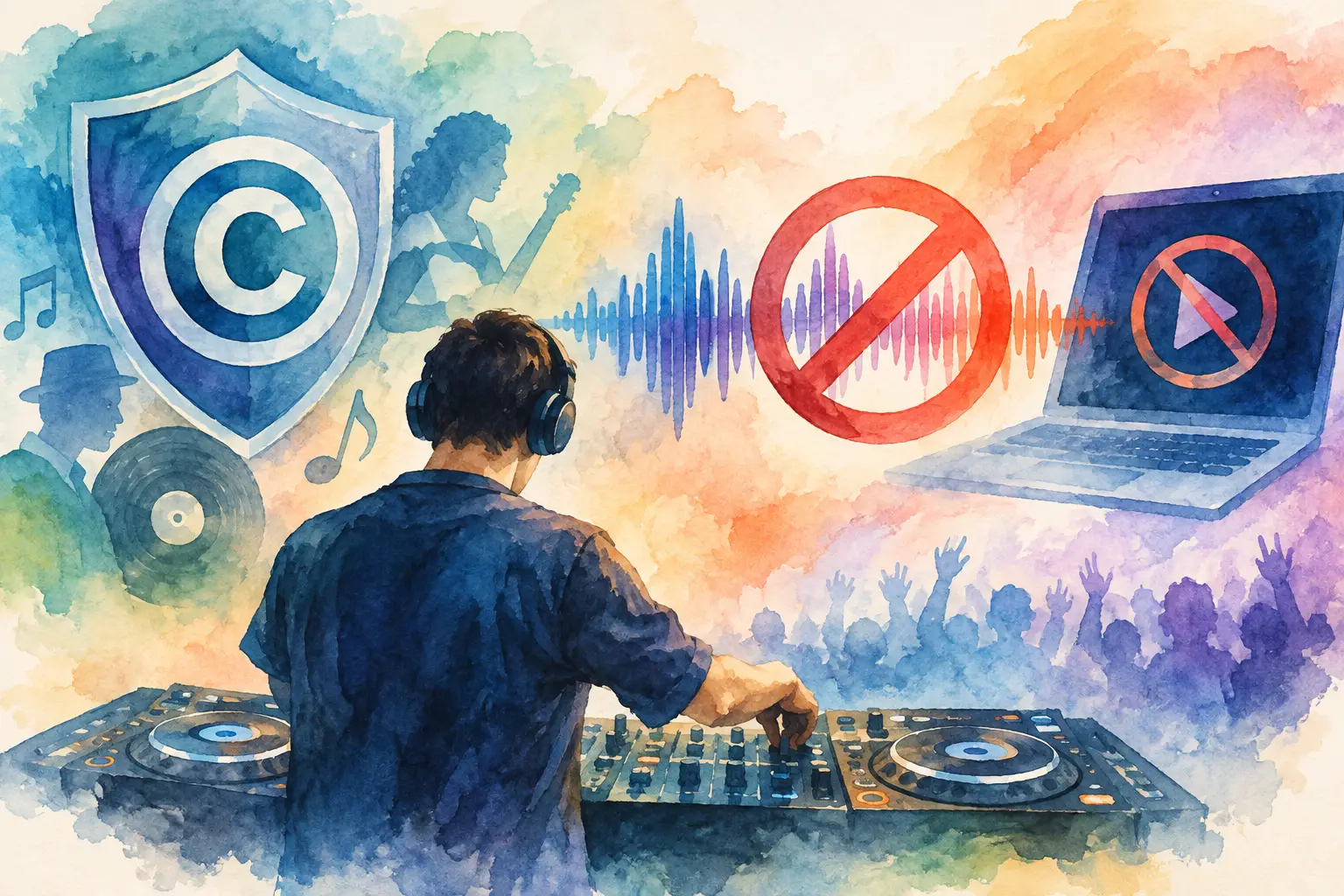
A mix can be technically sharp, beautifully paced and packed with records people want to hear, then vanish from a platform before the first listener reaches the second drop. So, why are DJ mixes blocked? Usually, it is not about the quality of the DJing. It is about the rights attached to the music inside the mix, and the automated systems platforms use to manage those rights at scale.
For DJs, selectors and listeners, this can feel backwards. DJ culture has always grown through discovery: a house track next to an acid cut, a hip-hop vocal over a leftfield beat, an unexpected classic brought back to life at 2am. Online platforms make that culture global, but they also have legal obligations to labels, publishers and artists. A brilliant set can therefore trigger a claim simply because it contains music the uploader does not own or have permission to use.
Why are DJ mixes blocked on platforms?
Most DJ mixes contain multiple copyrighted works. That means there are usually two separate rights in play for each track: the sound recording, often controlled by an artist or label, and the underlying composition, controlled by songwriters and music publishers. A mix may also include an official remix, samples, acapellas or bootleg edits, each of which can introduce another layer of ownership.
When you upload the set, platforms scan it using audio-recognition technology. YouTube is well known for its Content ID system, while SoundCloud, Facebook, Instagram and other services use their own matching tools or rights-management partners. If the system recognises a track, the rights holder’s policy can be applied automatically.
That policy is not always a full block. It may place adverts on the upload, redirect revenue to the rightsholder, mute a section, limit availability in certain countries, or leave the mix online while collecting viewing data. But if one label or publisher has chosen a blocking policy, a 90-minute mix can be stopped because of one tune.
This is why two nearly identical mixes can receive very different treatment. One version may stay live on a platform for years, while another is removed within minutes. The difference can be the territory, the rightsholder, a particular edit used, or a change in a label’s policy. It is rarely proof that one DJ has somehow found a permanent loophole.
A copyright claim is not always a strike
It helps to separate the words people often use interchangeably. A copyright claim means a platform or rightsholder has identified protected material and applied a policy. On some services, that might mean the mix remains available but cannot earn money for the uploader. A copyright strike or takedown is more serious: the content is removed, and repeated issues can put an account at risk.
A geo-block is different again. Your mix may play in the UK but be unavailable in Germany, the United States or another territory where the licensing arrangement is different. For an international audience, that matters. A listener who sees “not available in your country” is unlikely to spend ten minutes investigating why.
There is also a human side to the process. A label might manually request removal because the upload uses a newly released track, an unreleased promo, a remix not cleared for public use, or music they are actively monetising elsewhere. DJs are often working from the best intentions – supporting records, building scenes and sending listeners towards artists – but good intent does not replace a licence.
The real issue: DJ permission is not upload permission
Buying a download, vinyl record or streaming subscription gives you permission to listen to the music under certain conditions. It does not automatically give you permission to reproduce it inside a recorded mix and distribute that recording publicly.
Likewise, being allowed to play a track in a club, bar or radio setting does not necessarily cover an on-demand upload. Venue and broadcast licences are a separate world from a permanent, replayable mix hosted online. This is one of the biggest sources of confusion in DJ culture.
A producer saying “yes, play my track” can be useful, but it may not settle every right either. If the producer has signed the recording to a label, used a sampled vocal, or co-written the song with others, they may not control all the permissions required. A written agreement from the relevant rightsholder is far safer than an informal message, particularly if a mix is part of a commercial campaign.
Why mixes get blocked even when they promote the music
Promotion is valuable, and plenty of labels understand that DJs can introduce a record to the right crowd faster than an advert ever could. A well-curated mix can send listeners to a new release, a club night or an artist catalogue. The problem is that platforms cannot reliably judge context at volume.
Their systems are designed to identify audio, not to assess whether your set is tasteful, transformative or helping a dance track find its people. They also cannot assume every uploader is acting fairly. The same technology that catches an unauthorised full-album upload can catch a two-minute section in a carefully programmed radio mix.
The trade-off is clear. Automated rights management protects artists and labels from unlicensed use, but it can be blunt around long-form DJ culture. The best response is not to gamble on avoiding detection. It is to choose a release route that matches the music and permissions you have.
How to publish DJ mixes with fewer problems
Start with the tracklist before you record. Keep accurate artist, title, label and version details, including whether a record is an original, remix, edit or bootleg. This will not prevent an automatic claim, but it makes any later conversation with a label or platform far easier. It also gives listeners proper credits, which is basic respect for the music.
If you want the lowest-risk route, build mixes around your own productions, music you have explicitly licensed, and tracks from artists who have confirmed that public use is permitted. This is especially practical for a producer-DJ with a catalogue of originals, remixes cleared for use, and collaborators who understand the project. It may narrow the selection, but it gives you control over where the mix can travel.
For mixes containing commercial releases, consider services that are specifically set up for DJ programming and licensed catalogues. Their rules still vary, and not every track will be available, but they are often better suited to a continuous set than a general video or social platform. Read the current upload terms rather than relying on old forum advice. Policies change, catalogues change and a platform that tolerated a format last year may handle it differently now.
Avoid presenting an unofficial edit as an official remix. Label it clearly as a bootleg, mash-up or DJ edit where appropriate, and never imply artist approval you do not have. Also be careful with downloadable files. A stream with a claim may be tolerated under a platform agreement, while offering the same mix as a download can create a separate problem.
Should you dispute a blocked DJ mix?
Only dispute a claim if you genuinely have the necessary rights, the match is wrong, or the platform has applied the policy in error. A dispute is not a request for mercy, and it is not a way to argue that the mix is promotional. It is a formal rights-based process.
If you have written permission, keep it organised with the track details, date, scope and named rightsholder. If a claim is incorrect because the system matched the wrong recording, explain that calmly and precisely. Do not dispute just because other DJs have uploaded the same tune. Their upload may be claimed, geo-restricted, unreported for now, or cleared through an arrangement you do not know about.
When a mix is blocked, check which track triggered the action before throwing away the whole project. You may be able to replace that track, create a revised version for the affected territory, or publish a tracklist and direct people towards the individual releases through the correct channels. The answer depends on the platform’s policy and the rights involved.
Build the mix around discovery, not just survival
A blocked upload is frustrating, but it can also sharpen the way you release mixes. Treat the tracklist as part of the experience. Credit every artist, mention labels where possible, and make space for fresh independent music alongside the established favourites. That gives fans a route from the set to the wider scene.
For DJ Wez G-style programming, that might mean placing original house, acid, techno, chillout or drum and bass material inside a wider journey, while keeping different versions ready for the platforms that suit them. A high-energy club selection, a radio episode and an original-production showcase do not have to be the same upload. Each can serve a different audience and rights position.
The goal is not to make mixes less adventurous. It is to make the release plan as considered as the blend. Keep the music moving, support the people who made it, and give your listeners clear ways to discover what lit up the set. CHEERS!

Leave a Reply