
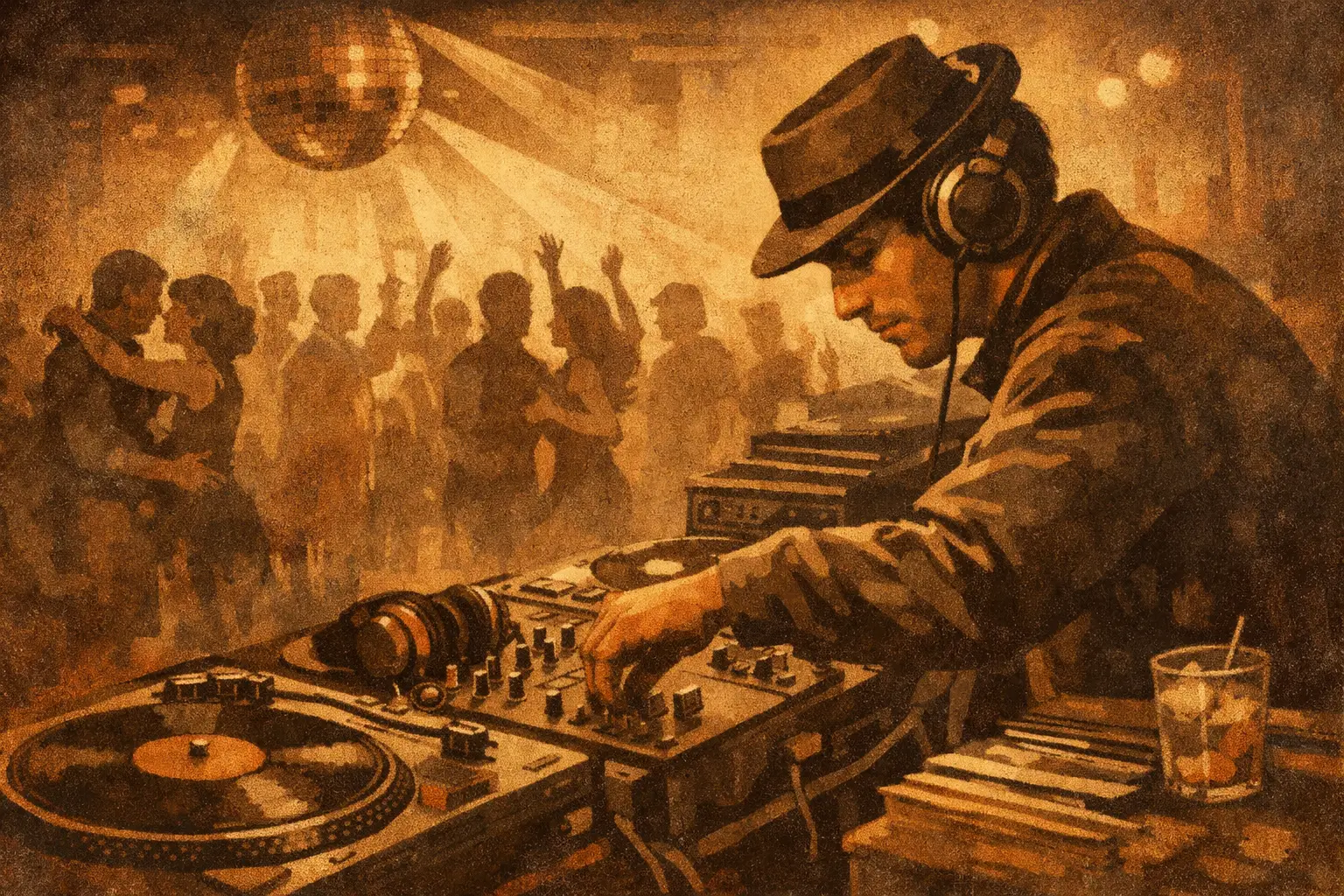
A great DJ set can change the temperature of a room without saying a word. One record creates a little space, the next one tightens the rhythm, and suddenly strangers are moving as if they arrived together. That shared instinct is at the heart of DJ culture. It is not simply about playing popular tracks or owning expensive equipment. It is about selection, timing, curiosity and reading the people in front of you.
For listeners, DJs are trusted guides through an endless supply of music. For producers, they are the first real test of whether a track can travel beyond headphones and into a club, car, kitchen party, radio show or late-night playlist. The format has changed massively, but that connection between selector and listener remains the point.
DJ Culture Is Built on Selection
There has never been more music available, and that makes a DJ’s taste more valuable, not less. A useful set does not just confirm what people already know. It gives familiar records a new setting, places a fresh artist beside an established name, and finds the route between different tempos, moods and scenes.
A house DJ may begin with a deep, rolling groove, bring in a vocal hook that everybody recognises, then steer the floor towards acid house pressure. A drum and bass set might move from soulful rollers into sharper, more physical tracks. None of this needs to be genre-pure. In fact, some of the most memorable selectors are the ones who understand when to let techno sit beside electro, when a hip-hop acapella can lift a dance record, or when a chillout track is exactly what the moment needs.
That is why a good mix still feels personal, even when thousands of people hear it. Track selection tells a story about what the DJ values. It can be raw, polished, nostalgic, futuristic, playful or properly strange. The important thing is that it says something.
The Dancefloor Is Still the Best Feedback Loop
Streaming figures, saves, follows and playlist placements matter. They show reach, and they can help independent artists turn a release into momentum. But the dancefloor offers a different kind of information. There is no hiding behind a passive play when a room is reacting in real time.
A DJ learns quickly when an intro is too long, when a bassline needs room to breathe, or when a crowd wants release rather than another layer of tension. The best DJs do not force a pre-planned vision onto every crowd. They arrive prepared, but they remain alert. A packed Saturday night club, a beach bar at sunset and a radio show for headphone listeners all call for different decisions.
That flexibility is often mistaken for simply taking requests. It is more demanding than that. Reading a crowd means knowing the difference between giving people what they expect and giving them something better than they expected. Sometimes the right choice is the obvious anthem. Sometimes it is an unfamiliar record with enough character to make people ask, ‘What is this?’
From Vinyl Ritual to Digital Possibility
Vinyl shaped much of the visual language around DJing: the record bag, the sleeve artwork, the hunt through a record shop, the cueing ritual and the physical act of moving from one tune to another. Those things still matter to plenty of DJs, collectors and dance music fans. Playing vinyl can be tactile, demanding and deeply satisfying.
Yet treating vinyl as the only authentic route into DJing misses the real story. Digital DJing has made experimentation more accessible. A producer can finish a track, test it in a set, share it in a mix and reach listeners around the world without waiting months for a physical pressing. Controllers, media players, USB libraries and software have broadened who gets to participate.
There are trade-offs. A huge digital library can encourage lazy selection, and some DJs become overly dependent on visual waveforms, sync buttons or effects. At the same time, vinyl can become expensive and impractical for a working DJ carrying varied music for several hours. The format is less important than the musical judgement behind it. Beatmatching by ear is a valuable skill; so is knowing when not to overwork a transition.
DJ Culture Gives New Music a Life
A release becomes more than a file when it is placed in context. A DJ can introduce a new track to a room, make a radio listener stop what they are doing, or turn a low-key tune into the record people remember from a night out. This is especially vital for independent artists without the marketing spend of major labels.
DJs are not merely promoters, though. They are interpreters. The same production can feel completely different at the start of a warm-up set, during peak time, or in a sunlit weekend mix. A vocal house record may become a hands-in-the-air moment after a run of tougher tracks. An acid line can feel mischievous in one setting and ferocious in another.
For producers, that means making music with purpose. The loudest master is not always the most effective club record. DJs need useful intros and outros, a clear rhythmic identity and a sound that holds together on proper systems. That does not mean every track must follow the same arrangement. It means the arrangement should earn its place.
At Wez G Music, that range matters. Club energy, acid pressure, downtempo escape, vocal moments and left-field ideas can all belong in the same wider world when the selection has a point. A release such as Windy City Acid serves a different moment from Distant Shores Are Far Away, but both can find their audience through the right DJ, mix or playlist.
The Community Around the Booth
DJ culture is often framed around the person behind the decks, but it is made by more people than that. Promoters take risks on line-ups. Sound engineers make the system hit properly. Visual artists set an atmosphere. Bar staff, door teams, photographers, dancers, radio hosts, label runners and bedroom producers all add to the ecosystem.
The audience has a role too. A strong crowd does not just consume a set. It responds. It gives a DJ the confidence to stretch out, to play the unusual record, to bring the energy down before lifting it again. That exchange is why smaller nights can be as important as festival stages. A room of 80 people who are fully present can create a stronger musical memory than a much bigger but distracted crowd.
Online communities extend that feeling between events. Mix comments, track IDs, shared playlists and short clips can keep a tune moving long after the lights come up. The danger is reducing every moment to content. Not every dancefloor needs phones in the air, and not every DJ needs to perform for a camera. Some records deserve to be heard without an immediate post attached.
What Makes a DJ Set Worth Replaying?
Technical ability matters, but flawless mixing alone rarely makes a set unforgettable. The sets people return to usually have contrast. They know when to build, when to strip back, when to surprise and when to let a brilliant record play long enough for its magic to land.
A worthwhile mix also has a point of view. It might be 90 minutes of deep house with patient transitions, a quick-fire run through rave classics, or a worldwide journey through broken beats, pop edits and bass-heavy club music. Consistency does not mean sameness. It means the choices feel intentional.
For aspiring DJs, the best starting move is not buying every new bit of kit. Build a small collection you genuinely rate, practise transitions until they become natural, record mixes, and listen back honestly. Notice where the energy drops. Notice whether the tracks are fighting each other. Most importantly, learn to enjoy the process of finding music. That hunger is difficult to fake.
DJ culture keeps moving because the next great set is never only about nostalgia or new technology. It is about someone hearing possibility in a record, then sharing it at exactly the right time. Keep searching, keep listening closely, and when a tune gives you that feeling, pass it on. CHEERS!

Leave a Reply