
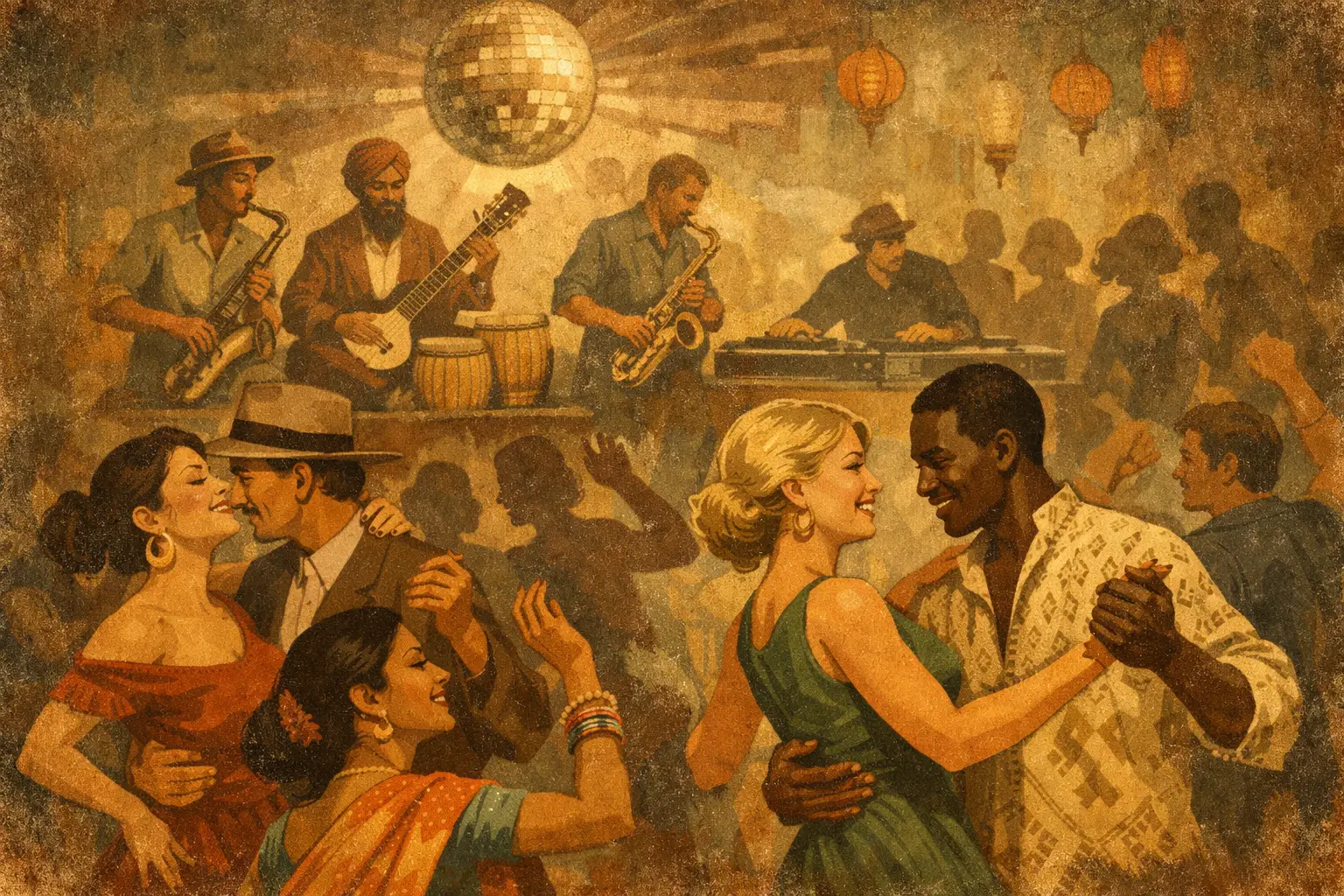
A four-to-the-floor kick can travel a long way, but it becomes unforgettable when another musical language answers it. That is the real pull of world music fusion: a house groove meeting hand percussion, a bass-heavy electronic track shaped by a vocal tradition, or a chilled beach rhythm carrying instruments that do not normally appear in a club set.
For listeners, it can make playlists feel bigger than one scene or one city. For DJs and producers, it opens up fresh rhythmic possibilities without abandoning the energy that makes people move. The best results are not about adding an exotic sound over a generic beat. They come from listening closely, knowing where the music comes from, and letting every element earn its place in the arrangement.
World Music Fusion Is More Than a Genre Tag
The phrase covers a huge range of music, which is both useful and slightly misleading. It may describe electronic productions that work with African, Latin American, South Asian, Middle Eastern, Caribbean or East Asian musical forms. It can also mean a collaboration between artists rooted in different local scenes, or a track that combines acoustic tradition with modern studio production.
The important point is that fusion is not a shortcut to instant atmosphere. A sampled drum, a flute phrase or a vocal chop can sound exciting for eight bars, but it will feel thin if the track has no relationship with the rhythm, melody or culture behind it. Strong fusion has a conversation at its centre. The electronic production and the source material change each other.
That is why the best tracks can work across so many settings. A rolling percussion pattern might bring movement to a deep-house warm-up. A hand-played rhythm can cut through a techno arrangement that is otherwise built from machines. A spacious vocal and string line can make a downtempo set feel like it has genuinely arrived somewhere, rather than merely changed BPM.
Why It Works So Well in DJ Sets
Club music has always borrowed, traded and evolved through contact between places. Disco, house, hip-hop, jungle, garage, techno and drum and bass all grew through communities reshaping available sounds into something local and forward-facing. World music fusion belongs in that continuing story when it is made with care.
For a DJ, the appeal is practical as well as creative. Familiar drum programming gives dancers a way in, while a new percussion texture, scale or vocal pattern holds their attention. In a long set, this can be the moment that resets the room. You do not need to change the whole musical direction to create surprise.
A percussion-led electronic record often works particularly well between genres. It can bridge house and afro-influenced grooves, move from chillout into broken beat, or ease a dancefloor from melodic material towards a tougher techno section. The transition depends on the tune, of course. A beautiful track with a loose live tempo may require more preparation than a tightly quantised club production.
The trick is not to treat cultural sounds as a novelty section in the middle of a set. If one record brings in a new rhythmic feel, support it with tracks that share some of its energy, swing or instrumental warmth. Let the moment breathe. A rushed transition can turn a powerful musical exchange into a gimmick.
Build Around Rhythm Before Genre
Genre labels are useful for searching, but rhythm is usually the better mixing tool. Listen for where the emphasis falls: straight kicks, syncopated claps, swung percussion, polyrhythms, half-time movement or a bass line that pushes ahead of the beat. Those details tell you more about whether two records will work together than whether both have been filed under house, world, electronic or chillout.
If you are building a playlist or preparing a mix, start with a small group of tracks that share a rhythmic family. Then experiment with contrast in sound design. A dry drum machine can sit brilliantly beside organic shakers. A wide ambient pad can create space around a close, intimate vocal. The contrast is what catches the ear, but the shared pulse is what keeps the mix moving.
Respect Is Part of the Production
There is a line between influence and extraction. It is worth taking seriously, especially when electronic producers have easy access to sample packs, field recordings and chopped vocals from musical traditions they may not fully understand.
The simple version is this: know what you are using, who created it, and whether you have the right to use it. If a vocalist, instrumentalist or writer has contributed something central to a track, they deserve clear credit and a fair agreement. If you are sampling a commercial recording, permission is not optional. If you are working with a traditional form, do some homework before framing it with broad labels or sales language.
Collaboration is often the most exciting route. It brings real musical knowledge into the studio and can send a production in directions that would never come from scrolling through presets. A player may suggest a different tempo, tuning, call-and-response structure or arrangement entirely. That is not an obstacle to the producer’s vision. It is where the vision becomes more interesting.
There is also a listener’s role here. Curiosity should go beyond the one track that appears in a playlist. If a rhythm, language or instrument grabs you, spend time with artists and scenes connected to it. Support releases, learn names, and avoid treating an entire culture as a mood board for a summer mix.
A Better Way to Make World Music Fusion
Producers do not need a huge studio or a globe-trotting budget to make work with depth. They do need patience. Before building a drop around a sample or instrument, ask what role it plays in the original musical setting. Is it leading the rhythm, answering a vocal, creating tension, marking a ceremony, or simply adding colour? The answer should affect the arrangement.
A useful production process has four stages:
- Begin with listening, not sampling. Spend time with full recordings and notice structure, tempo changes, silence and repetition.
- Choose one main musical idea to develop rather than stacking unrelated sounds from different regions into one busy track.
- Create room in the mix. Organic percussion and vocals need space, so remove unnecessary synth layers before reaching for more effects.
- Credit collaborators properly and keep the release information accurate, from performer names to writing and publishing splits.
Simplicity matters. A tight club arrangement may only need a great drum groove, one distinctive melodic phrase, a bass line and a vocal response. Trying to represent an entire musical tradition in a single three-minute track is impossible and usually leads to clutter. Better to make one clear, respectful connection and make it hit.
Keep the Human Detail
Electronic music does not have to iron out every imperfection. Tiny changes in hand percussion, a breath before a sung phrase, a sliding note, or a slightly late response can give a programmed groove real character. Quantisation has its place, especially for peak-time mixing, but total precision can remove the very tension that made the original performance compelling.
This is where arrangement becomes more valuable than adding more plugins. Leave a gap before a vocal enters. Let a percussion pattern play alone for a few bars. Bring the kick back with intention. Those small decisions can make a track feel larger than its number of channels.
From Beach Energy to Late-Night Pressure
World music fusion is not one mood. It can suit sunlit chillout, pop hooks, heavy bass, rolling house, acid lines and deep after-hours territory. The choice comes down to intention. Warm acoustic textures and open space can create a beach atmosphere; sharper drums, clipped vocals and repetition can take the same broad influence into a dark club environment.
That range is part of why it fits an independent, cross-genre music world so naturally. A listener might want relaxed sounds on a morning journey, a vocal-led dance track in the afternoon, and tougher electronic pressure after midnight. There is no need to stay in one lane if the music has a clear identity. Wez G Music has always treated that variety as part of the fun: music for movement, music for escape, and music worth digging into again.
For DJs, the next useful move is simple. Choose one record that genuinely interests you, learn its rhythms rather than just its genre label, and give it the right neighbours in your next set. When the room hears a new sound presented with confidence and care, discovery stops being a marketing word and becomes the reason everyone came out.

Leave a Reply