
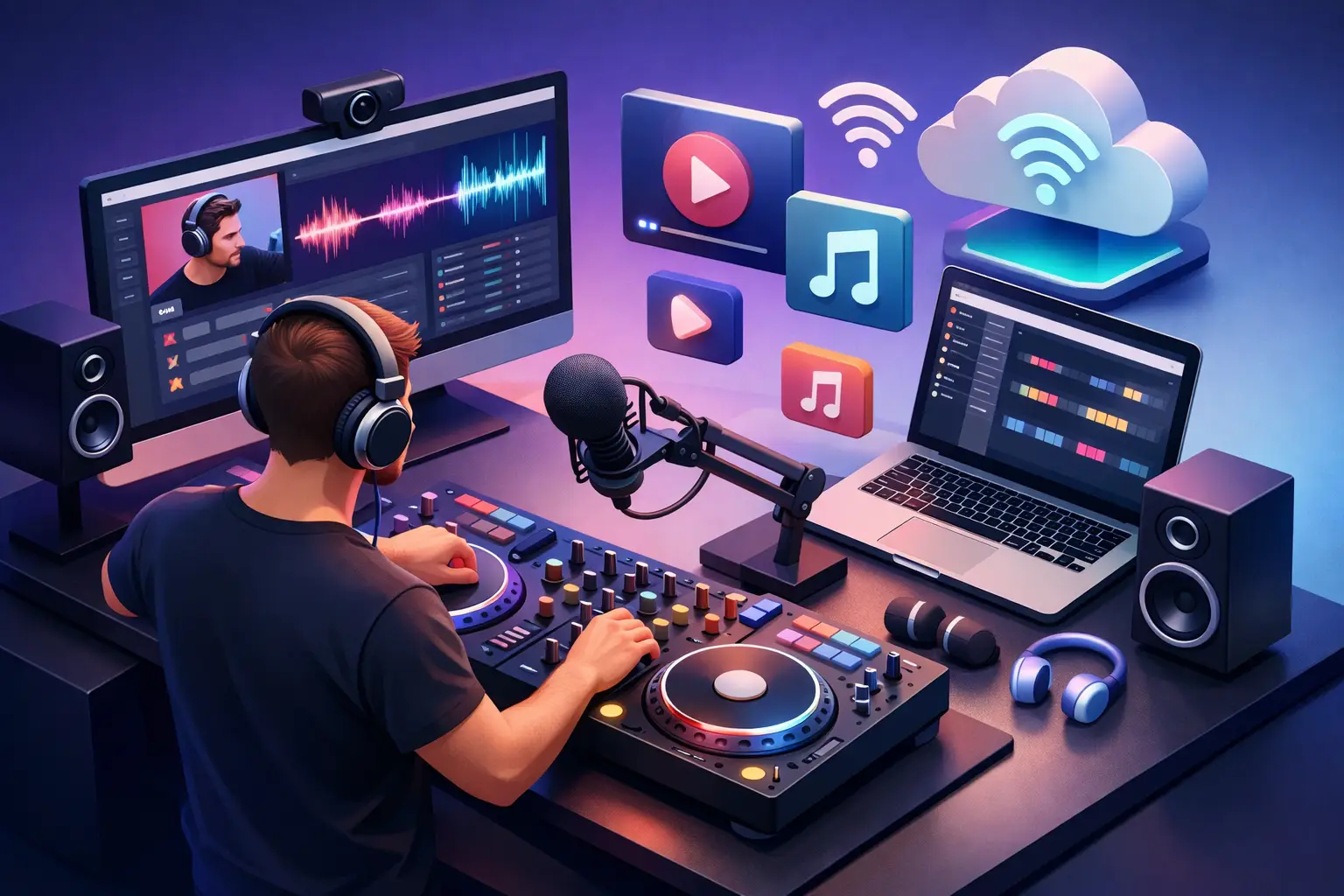
A brilliant set can now reach far beyond the club, but the question ‘can DJs stream music?’ has no one-size-fits-all answer. Streaming a DJ set from your bedroom, playing from a subscription catalogue at a bar, and uploading a recorded mix are three different activities – and each comes with its own rules, technical limits and creative trade-offs.
For DJs building a following around house, acid, techno, drum and bass, hip-hop or anything in between, streaming is still a powerful way to get heard. The smart move is knowing what you are streaming, where it is going, and who holds the rights to the music in the mix.
Can DJs stream music from Spotify and other services?
A personal music subscription is usually for personal listening, not for public performance, commercial DJ work or broadcasting. That means a standard streaming account may be perfect for digging for tracks, checking a new release or building inspiration playlists at home, but it is not automatically a licence to play a paid gig or broadcast a set to an audience.
Some DJ software platforms offer streaming integrations with selected music services. These can be genuinely useful for practice, last-minute requests and discovering new records. However, the available catalogue, offline access, recording permissions and territory availability can all differ. A track that loads perfectly in your home setup may be unavailable at the next venue, disappear from a catalogue, or be blocked from recording within the software.
Treat an integrated streaming catalogue as a useful extra rather than the only crate you carry. If a key transition, peak-time record or closing tune matters to the set, own or properly download a reliable copy where your licensing arrangement allows it. Weak venue Wi-Fi, crowded mobile networks and a platform outage are not glamorous reasons to lose the dancefloor.
There is also a musical point here. Streaming can tempt a DJ into playing everything, all at once. Better selections still win. A smaller, well-organised collection of tracks you understand will often land harder than endless access with no clear direction.
Playing in venues is not the same as livestreaming
In the UK, venues commonly arrange music licences for public performance, often through the appropriate music licensing bodies. That can cover the music played in the physical space, but it does not necessarily grant a DJ the right to broadcast that performance online, save it as a video, or post the full recording the next day.
The promoter, venue, event organiser and DJ should be clear about who is responsible for permissions. Do not assume that because a club has a licence, every livestream, camera feed and social clip is covered. The answer may depend on the country, the platform, the use of ticketing or sponsorship, and whether the show remains available after the event.
For radio-style broadcasts, specialist services and stations may have their own licences and reporting processes. Again, that arrangement belongs to the broadcaster. If you are guesting on a show, ask what is covered and whether the mix will be archived. It is a quick conversation that can prevent a frustrating takedown later.
Livestreaming DJ sets: expect platform checks
Livestreaming feels immediate: press go, bring the energy, chat to the people listening and turn a Friday night into a worldwide session. The complication is that major platforms use automated rights-detection systems. A stream may be interrupted, muted, restricted by territory or removed after the event. A saved replay can face different checks from the live broadcast itself.
That does not mean DJs should avoid livestreams. It means the format needs planning. Check the platform’s current music policy before promoting the session, because these policies change. Be realistic with your audience too. Promising a replay for the whole weekend is risky if the set is built entirely from commercial tracks that could be muted or blocked.
Original music gives you much more control. A set featuring your own productions, remixes you have permission to use, music from artists who have agreed to participate, and properly cleared catalogue makes a livestream far easier to manage. Independent DJs can turn this into a real advantage: premiere an unreleased club mix, test several versions of a new track, or invite collaborators into a themed broadcast.
A Wez G set, for example, can move from the acid pressure of Windy City Acid to a brighter dance moment such as Lifting Me Higher, then take a left turn into chilled material. That range is not just a playlist trick. It is a way of making a stream feel like a show with its own world, rather than a random sequence of songs.
Live does not always mean replayable
Plan your live set and your on-demand content as separate products. The live broadcast can be loose, interactive and reactive. A recorded mix can be tighter, properly tagged and made with rights and distribution in mind.
If a platform allows a live session but removes the archive, use that moment rather than fighting it. Tell listeners it is live-only, give it a clear start time, and make the chat part of the event. Then release a separate, cleared mix or a short highlights edit afterwards.
Short clips are useful for promotion, but they are not automatically exempt from copyright rules. Keep them purposeful: show a transition, a crowd response, a production breakdown or a few seconds of your own new record. Build excitement without assuming any length of unlicensed audio is safe to post.
A practical setup that will not let the music down
Good streaming audio matters more than flashy visuals. Listeners will forgive a modest camera angle if the kick is clean, the levels are steady and your voice is audible when you speak. They will leave quickly if the stream distorts every time the bassline arrives.
Start by recording a private test. Listen back on headphones, monitors and a phone speaker. Check that the master output is not clipping, microphone volume is sensible, and any effects are not turning the whole set into a washed-out blur. If you are using a controller, make sure the livestream receives the master signal rather than a laptop microphone trying to capture the room.
A wired internet connection is the safer choice whenever possible. If you must rely on mobile data, test it at the same time of day as the planned stream and keep a backup recording locally. Set a sensible upload quality rather than chasing a huge bitrate your connection cannot sustain.
Your track information is part of the experience, too. If you can display artist and title details, do it accurately. If you publish a tracklist after the set, make it clear where the music came from. Crediting artists is good DJ culture, helps listeners find new music and shows that your selections are considered.
Choose the stream’s job before you press record
The strongest DJ streams have a reason to exist. You might be warming people up for a new release, playing a summer beach selection, running a deep late-night house session, celebrating a playlist placement or sharing a monthly radio-style mix. Give the session a name, a mood and a useful running time.
A two-hour stream is not automatically better than a focused 45-minute set. If you are new to broadcasting, a shorter session makes it easier to maintain energy, manage technical issues and leave people wanting the next one. If your community already turns up for extended mixes, then make the longer format an event and programme its peaks and breathers properly.
Be direct about when and where people can listen, but do not let promotion become louder than the music. A strong visual, a simple schedule and a clear genre promise are enough. After the stream, keep the conversation moving by asking which track hit hardest, which genre listeners want next, or whether they spotted an unreleased production.
Build a stream-friendly music library
The most sustainable answer for DJs is to build a library with several sources. Purchased downloads and DJ-focused music services can offer dependable files. Promo relationships can bring fresh music, provided the artist or label has approved the use. Your own releases and approved collaborations give you material that is unmistakably yours.
Keep records of where tracks came from and what you are allowed to do with them. That may sound less exciting than cue points and filters, but it becomes vital when a label asks for information, a platform flags a track, or you want to put together a mix that can live online for longer than one night.
Can DJs stream? Absolutely – and the opportunities are huge. Just make the format work for the music rather than treating every stream as the same thing. A well-cleared, great-sounding session with a distinct mood can travel further than a risky broadcast built on someone else’s catalogue. Get your crates ready, test the signal, tell your people when you are live, and give them a set worth coming back for. CHEERS!

Leave a Reply