
By Wez G | 28 November 2026
On 1 August 2027, China’s People’s Liberation Army will mark 100 years since the Nanchang Uprising, the event it commemorates as its founding. The anniversary has become a focal point for one of the most consequential questions in world politics. Could Xi Jinping mark the occasion by trying to take Taiwan by force? On the evidence available today, a full-scale invasion in 2027 looks unlikely. A year of sustained military pressure, with a real possibility of a crisis in the Taiwan Strait, looks more plausible. cambridge.org
Why 2027 became the year everyone talks about
Beijing set itself a public goal to modernise its armed forces by the PLA’s centenary. Xi’s report to the Communist Party’s 20th National Congress in 2022 identified the anniversary as a military milestone, and he reaffirmed that goal in July 2026. A more specific claim came from Washington. In 2023, then CIA director William Burns said US intelligence understood that Xi had instructed the PLA to be ready by 2027 to invade Taiwan if called upon. Burns said that Xi’s decision on whether and when to use force remained open. Ministry of National Defense
The US intelligence community’s March 2026 assessment went further. It judged that Chinese leaders had no current plan to invade in 2027 and no fixed timetable for achieving unification. In October, Reuters reported that US officials saw an invasion before 2028 as increasingly unlikely. Those assessments can coexist with a serious military build-up. A more capable PLA gives Xi greater leverage in a crisis and more options if he later decides to use force. archive.dni.gov
What the November drills tell us
On 27 November, Reuters reported on a weeks-long Chinese amphibious exercise in Fujian, the province facing Taiwan. Earlier in the month, it reported on unannounced Chinese exercises around Taiwan and across the western Pacific. Officials in Taipei described those drills as intimidation, while Beijing characterised its carrier activity as routine. Taken together, the reports show why the centenary deserves attention. Beijing is improving its military options while repeatedly demonstrating that it can exert pressure on Taiwan in peacetime. reuters.com
A full-scale invasion would still be an enormous gamble. China would have to move and sustain a large force across the Taiwan Strait, overcome determined resistance and contend with the possibility of US involvement. Even if Beijing expected an initial military success, it would have to reckon with the costs of a prolonged war and the disruption to its own economy. An anniversary offers a political reason to put military progress on display. It does little to change any of those calculations. archive.dni.gov
A crisis could start with commercial shipping
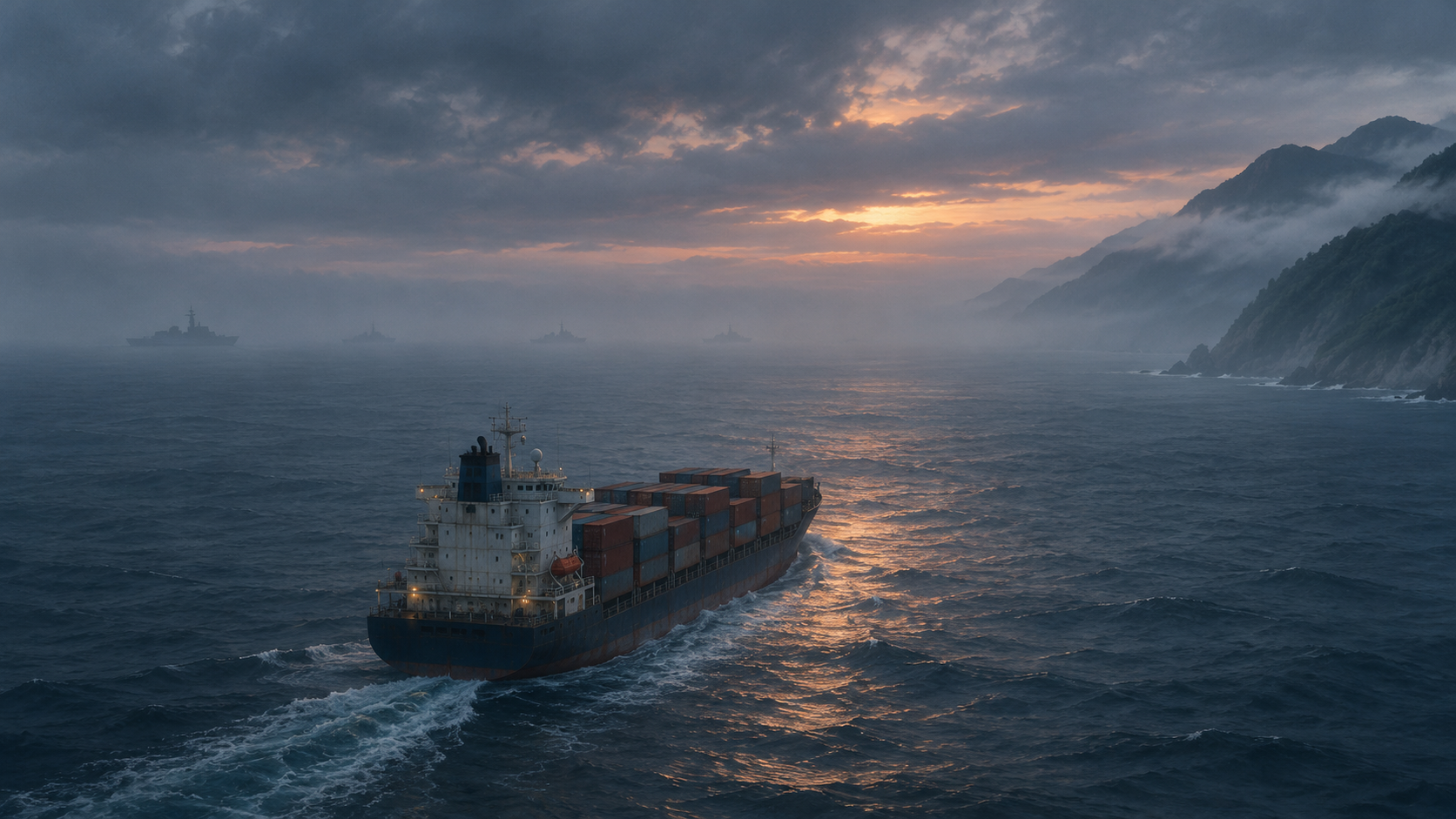
The scenario I would take especially seriously is a confrontation over access to Taiwan’s ports. China could declare a coastguard-led inspection regime for some commercial ships and present it as law enforcement. This is the kind of scenario analysts call a quarantine. A military blockade would be a more overt attempt to cut off traffic by force. Even a limited inspection regime could put shipping companies under pressure and force other governments to decide how to respond. An incident at sea could then escalate faster than either side intended. csis.org
Beijing also has reasons to keep using the tools it already employs. Military patrols and exercises impose recurring costs on Taiwan and keep the threat of force visible. They can also make it harder for Taipei to judge whether a particular deployment is routine pressure or the start of something more serious. For Taiwan, constant readiness carries costs of its own. Taiwan Strait Security Situation
Taiwan has a say in its own future
The debate about Xi’s timetable can make Taiwan sound like a piece of territory whose future will be settled elsewhere. It is a self-governing democracy, and its voters have their own ideas about the island’s future. The US–China Economic and Security Review Commission’s November 2026 report found that Taiwan’s public remained overwhelmingly opposed to political integration with China. That poses a problem for Beijing’s strategy. Military pressure may frighten people or disrupt daily life, but it offers little reason for Taiwanese voters to trust the government applying it. uscc.gov
So, will China invade in 2027?
My judgement is that Beijing is more likely to mark the PLA’s centenary by displaying its military power and keeping up the pressure on Taiwan. The judgement could change if Chinese leaders came to believe that waiting would make their political aims harder to achieve, or if a confrontation at sea escalated. Both possibilities deserve attention throughout the year.
The date I would watch is the day Beijing tries to turn a temporary exercise or shipping restriction into a lasting change in how the Strait is governed. That could provoke a crisis before, during or long after the centenary. And it would tell us far more about Beijing’s intentions than anything said at an anniversary parade.


Leave a Reply